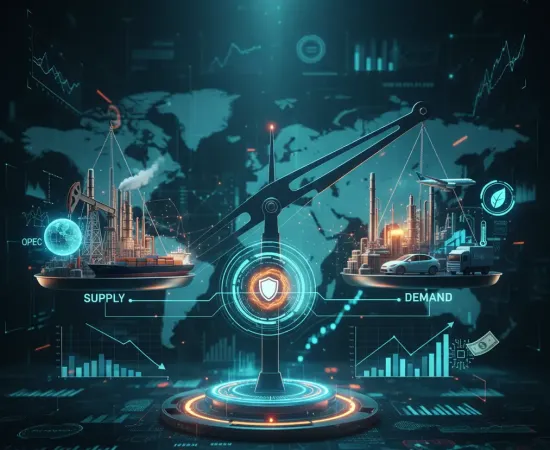
When people talk about investing in energy, the same references almost always appear: stocks, futures, indexes, ETFs, structured products. In other words, financial layers that rely—more or less indirectly—on a sector the investor rarely sees up close.
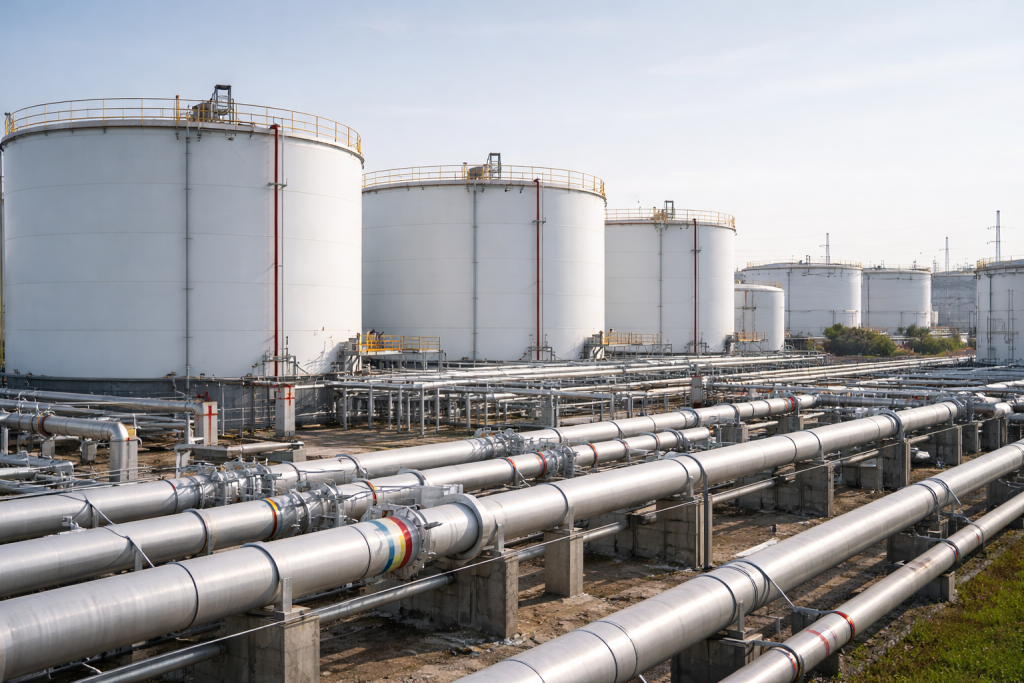
At SPFO, the starting point is different. Our daily work does not begin with a chart, but with physical operations: biofuel plants, storage tanks, supply contracts, vessels arriving at port, land logistics, and industrial clients who need product every single day.
From that reality, we build the PEIP: the Structured Investment Plan in Petroleum.
This article explains what lies behind that concept and why we believe it is a coherent way to connect private capital with real energy.
From the Tank to the Investor: The Origin of the PEIP
A PEIP is not a generic catalog product. It is not a typical “energy fund,” nor a closed vehicle where the investor enters without knowing exactly which assets are inside.
Each PEIP is born from a specific operation:
- A plant already in operation that needs capital to expand capacity or improve logistics.
- A storage hub that can become a strategic distribution point if its financial and operational structure is reinforced.
- A recurring import and distribution operation where the bottleneck is the amount of available capital, not demand.
Based on that real foundation, SPFO designs a structured plan:
- It defines the asset and its operational context.
- It analyzes demand, contracts, and the operator’s capabilities.
- It maps risks and mitigation tools.
- It determines how much capital makes sense to inject, on what timeline, and under what return logic.
The result is a PEIP: a framework that allows the investor to participate in a specific energy operation with far greater visibility than traditional financial products.
What the PEIP Is, in Simple Terms
A PEIP can be defined directly:
A PEIP is a structured plan that channels capital into energy operations with identifiable physical assets, measurable cash flows, and explicit risk management.
In practice, this implies three key ideas:
Real Asset
There is always a plant, an infrastructure, a logistics flow, or a set of concrete contracts behind it. The investor does not enter “the energy sector”—they enter a defined operation.
Engaged Industrial Operator
SPFO does not act as a mere financial intermediary. It is part of the operational structure: physical trading, logistics, contracts, hedging. That means skin in the game.
Return Based on the Real Economy
The target return is supported by industrial and logistical margins: buy–sell differentials, storage fees, plant services, inventory rotation, etc.—not purely speculative expectations.
PEIP vs. a Traditional Fund: A Different Approach
At first glance, a PEIP may resemble a sector-based energy fund. Both expose the investor to the same macro environment: energy demand, transition, regulation, price volatility.
The difference lies in the level of concreteness.
In a traditional fund:
- The investor buys shares of a portfolio of financial assets (stocks, bonds, derivatives).
- The connection to the physical asset is indirect and filtered through the stock market.
- Visibility into contracts, operations, and logistics is limited.
In a PEIP:
- The focus is on a specific asset and operation.
- It works with supply contracts, storage agreements, maritime and land logistics, industrial clients.
- The investor can understand which asset is being financed, what cash flow it generates, and how the return is structured.
It is not about claiming that one approach is universally better. They are different tools.
The PEIP is designed for the investor who wants to get closer to the real economy with a more direct and operational structure.

Why Energy Remains a Strategic Asset
Beyond the structure, the underlying question is clear:
Why look at the energy sector right now?
Several reasons:
Structural Demand
The global economy may go through cycles of higher or lower growth, but energy demand never disappears. The energy matrix evolves, renewables expand, regulations adjust—but transport, industry, and logistics still require fuels and biofuels.
Physical Assets That Generate Cash
Plants, tanks, terminals, supply contracts, logistics routes. These are not abstract intangibles; they are infrastructures and operations that, when well managed, generate recurring and measurable cash flows.
Space for Specialized Operators
Energy is a sector with real entry barriers: regulation, technical knowledge, access to product, relationships with suppliers and clients. That complexity creates inefficiencies and opportunities that only operators inside the physical market can capture.
For the investor, this means one thing:
If structured correctly, energy remains a strategic pillar of diversification.
SPFO’s Role Within the PEIP
SPFO positions itself as a platform that unites three worlds:
- Product: access to fuels and biofuels through real operations in Europe and Latin America.
- Logistics: terminals, plants, maritime and land routes, quality certifications, insurance.
- Capital: structuring vehicles so professional investors and family offices can participate in these operations with a clear risk–return framework.
In a PEIP, SPFO does not simply design the document—it participates in daily execution, which allows it to:
- Better control operational risk
- Align interests with the investor
- Translate on-the-ground reality into useful decision-making information
A Guide to Understanding the Model Before Sitting Down to Talk
The goal of this first phase is not for anyone to make an investment decision based on a post or article.
It is to offer context, structure, and a shared language.
That is why we developed the Quick Guide to PEIP Investment, where we:
- Explain the model in an organized way
- Show examples applied to real plants and logistics operations
- Detail how the main risks are managed
For anyone approaching the SPFO ecosystem for the first time, the guide is the natural bridge between curiosity and a serious conversation.

Next Step
If you want to understand how an energy operation becomes a structured investment opportunity, the first step is not a call—it is comprehension.
The Quick Guide to PEIP Investment is designed precisely for that:
To provide a clear view of the model, the assets, and the philosophy behind how we work with energy as an investment vehicle.
From there, the conversation can be far more concrete, transparent, and useful for all parties.