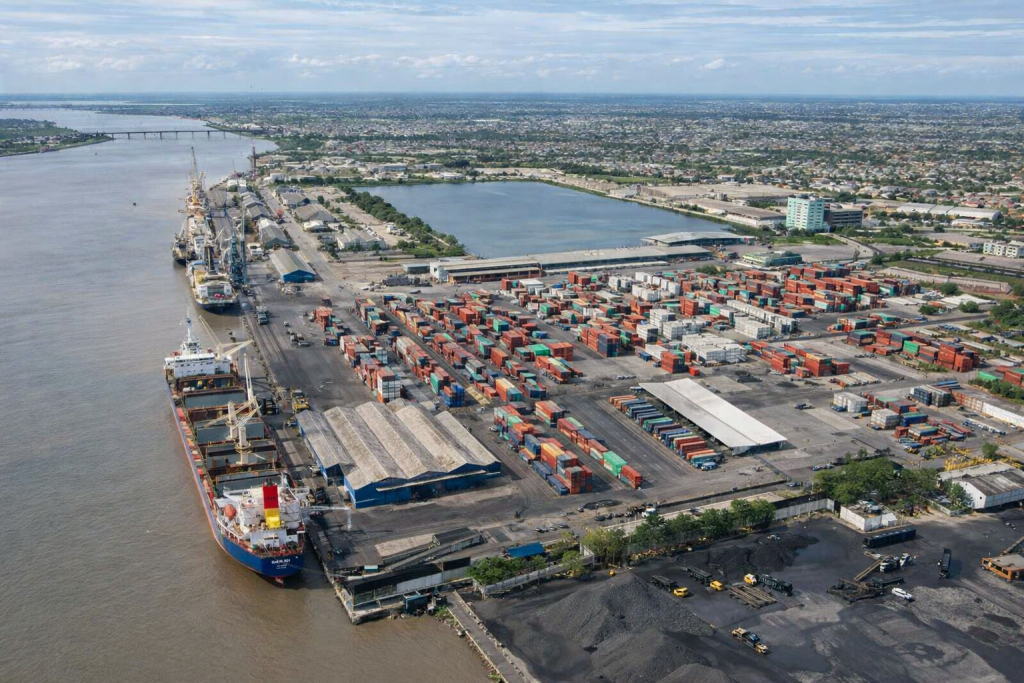
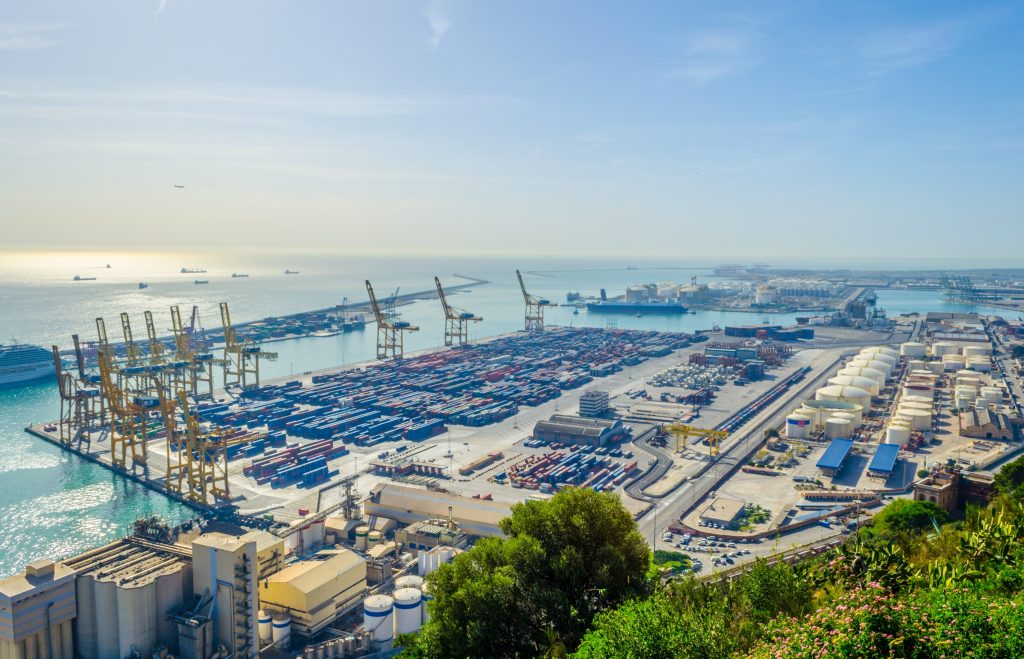
Vista aérea de un puerto industrial europeo con contenedores, grúas y terminales energéticas junto al mar.

PEIP Híspalis: SPFO’s Second European Pillar

Until now, when we talk about PEIP, we usually look first toward Latin America: Galapa, biofuels, exports to the Caribbean.
PEIP Híspalis adds a key piece to the map: a European industrial asset that is not built from scratch, but reactivated.

The logic is simple:
Take an existing biodiesel plant with operational experience, and bring it back into full operation with a new financial structure, a new operator, and a clear improvement plan.

This turns Spain into the second European pillar of the PEIP model:
not only as a destination country for product, but also as a place where industrial value is generated.

1. From Destination Country to Producing Country

Until now, Spain’s role in many energy operations has mainly been:

• an entry point for diesel, gasoline, or fuel oil vessels,
• a consumption market for industrial clients, fuel station networks, and logistics operators.

With PEIP Híspalis, the approach changes:

• Spain stops being only a destination and becomes the origin of part of the product,
• the plant becomes integrated into SPFO’s commercial network,
• and the investor gains access to a tangible European asset within the ecosystem.

In strategic terms, this means:

• geographic diversification (LatAm + Europe),
• asset diversification (trading + plant),
• and reinforcing the thesis of “real energy with physical assets.”
2. What a “Reactivation” Plant Really Means

This is not a greenfield project, but rather:

• a built industrial asset,
• with production history,
• currently underutilized due to lack of capital and structure.

Reactivation, in this context, involves:

• Taking control of the asset under a PEIP structure.
• Conducting a technical audit: equipment condition, required CAPEX, restart timelines.
• Updating licenses, permits, and environmental and safety protocols.
• Defining the product and market mix (biodiesel, by-products, logistics services).
• Restarting production with a logic 100% focused on margins and rotation.

The advantage over a new project is clear:
most construction risk is already behind; the challenge now is optimization and commercialization.
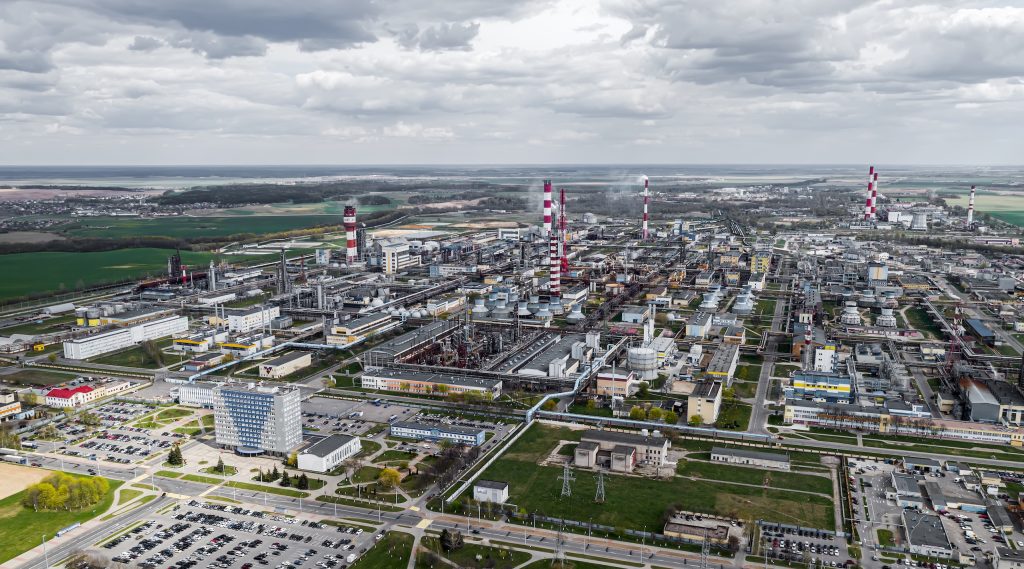
Vista aérea de una planta industrial europea con múltiples instalaciones, chimeneas y redes de tuberías.

3. Improvement Potential: Where the Value Lies

In a reactivation asset, value is not only in future operating margin, but also in the change of state of the asset itself:

A plant that is idle has limited value, even if the infrastructure exists.
A plant that is running, with contracts and cash flow, multiplies its financial value.

The main improvement levers are:

• Capacity utilization: taking the plant from minimal or zero load to a target operating level.
• Operational efficiency: optimizing fixed costs, logistics, and energy consumption.
• Client mix: combining local sales with exports, and medium-term contracts with selective spot operations.
• Integration with other PEIP lines: using the plant as support for existing trading operations.

For the investor, this translates into two layers of return:

• Annual cash flow generated by the plant once stabilized.
• Asset revaluation as it moves from “idle” to “operational” with track record and contracts.

4. Why It Makes Sense Within the PEIP Model

PEIP Spain is not an isolated project. It fits perfectly within the overall logic of the model:

• Identifiable physical asset (European biodiesel plant).
• Clear use of capital (acquisition/refurbishment, working capital for production and logistics).
• Measurable industrial margins, not abstract promises.
• Structured risk management: technical, regulatory, commercial, and financial.
• Governance and reporting aligned with institutional investors or family offices.

As a second European pillar, it reinforces three messages:

• SPFO does not only buy and sell product; it also controls key industrial assets.
• The PEIP model is replicable across geographies and asset types.
• The “LatAm + Europe” combination allows for more efficient management of costs, demand, and regulation.

Ingeniero industrial revisando documentación técnica en una planta energética europea.

5. What Type of Investor Fits This Model

PEIP Híspalis tends to resonate with investors who:

• seek exposure to energy and transition without relying solely on traditional financial instruments,
• value the idea of industrial turnaround (recovering an asset and capturing its revaluation),
• and want to do so within a proven structure like the PEIP model.

It is not a short-term speculative bet, but a project of:

• reactivation,
• consolidation,
• and medium-term generation of recurring cash flows.

Vista aérea de una planta industrial con tanques de almacenamiento de combustibles junto a un puerto marítimo.

PEIP Galapa: When Energy Investment Becomes Something Real

For months we’ve talked about the PEIP model as a structured way to invest in real energy: physical contracts, identifiable assets, agreed margins, and rigorous risk management.
But the logical question is:
“Okay, but what does this look like when applied to a real project?”
The answer is PEIP Galapa: the real case that best illustrates how SPFO connects capital with an operating biofuels plant in Colombia to generate returns.

1. Where Galapa Is and What Exists There

Galapa is a strategic municipality in the metropolitan area of Barranquilla (Colombia), connected to:

• the Port of Barranquilla,
• the land transport network of the Atlantic Coast,
• and several industrial and logistics hubs in the region.

There, SPFO operates in partnership with Biodiésel de la Costa, a plant specialized in:

• Production and storage of biofuels (B100 and blends),
• Handling of vegetable oils for the biodiesel industry,
• Fuel oil and related products for industrial and logistics uses.

We’re not talking about a “paper project,” but about tanks, pipelines, trucks, and active contracts.

Vista aérea de un puerto industrial con contenedores y buques de carga junto a una ciudad costera.

2. What Exactly PEIP Galapa Is

PEIP Galapa is a Structured Investment Plan in Petroleum and Energy whose objective is to:

• Inject capital into the Galapa plant,
• to increase product volume, logistics capacity, and inventory rotation,
• thereby expanding the operating margins of the activities already underway.

Instead of investing in a “generic fund,” the investor participates in:

• a specific industrial asset (the plant and its operational capacity),
• with identifiable products (B100, oils, fuel oil, etc.),
• and real contracts with local and regional clients.

3. From Current Operations to Expansion

In practice, Galapa has already executed operations such as:

• sales of B100 and vegetable base to processing plants,
• supply of fuel oil to national distributors,
• sale of biofuel to logistics operators,
• and a first pilot export of fuel oil to Central America.

These operations have shown net margins in the 11–14% range on rotated capital (after logistics and operating expenses).

PEIP Galapa aims to scale what already works, not invent something new:

• moving from operating with capital-limited capacity,
• to having more product, more stock, and greater ability to respond to existing demand.

Camión cisterna transportando combustible frente a una instalación industrial energética.

4. How the Investor Enters the Model

At a simplified level, the scheme works like this:

• The investor contributes capital to the PEIP Galapa vehicle.
• That capital is used to:
• purchase product (biofuels, oils, fuel, etc.),
• finance logistics and storage,
• cover operational needs to increase rotation.
• The plant executes the operations: purchase → processing/storage → sale.
• The margin generated in each cycle is distributed according to the PEIP structure, after costs and provisions.
• The investor receives a target annual return (within the range defined in the investment document), and SPFO shares profit as operator.

The key is that the investor does not take on the business alone:

• an operating plant,
• a local team,
• real contracts,
• and a defined risk–return model.

5. Risks… and How They Are Managed

Every investment carries risk. The difference lies in how it is controlled.

In Galapa, the main risks and mitigations are:

a) Counterparty Risk

Risk: non-payment or non-performance by clients or suppliers.
Mitigation:

• supply contracts with clear conditions,
• selection of counterparties with track record,
• commercial guarantees when applicable.

b) Operational / Logistics Risk

Risk: shutdowns, transport issues, inefficiencies at the plant.
Mitigation:

• plant with operational experience,
• agreements with logistics operators in the area,
• insurance and industrial safety protocols.

c) Market Risk

Risk: price fluctuations of raw materials and products.
Mitigation:

• contracts with agreed margins,
• product diversification (B100, oils, fuel oil),
• focus on recurring demand (industry, logistics, etc.).

The goal is not to eliminate risk (impossible), but to limit it and make it manageable.

6. Why Galapa Is a Strong “Case Study” for the PEIP Model

PEIP Galapa helps explain the PEIP model because it brings together several key elements:

• Visible asset: a plant that can be visited, audited, and photographed.
• Proven operations: real sales, with measurable billing and results.
• Clear demand: industrial and logistics clients who need product on a recurring basis.
• Immediate growth potential: with more capital, the plant can increase:
• purchase volume,
• available stock,
• export capacity,
• and therefore total margin.

In short: it’s not a promise; it’s an existing operation that capital helps scale.

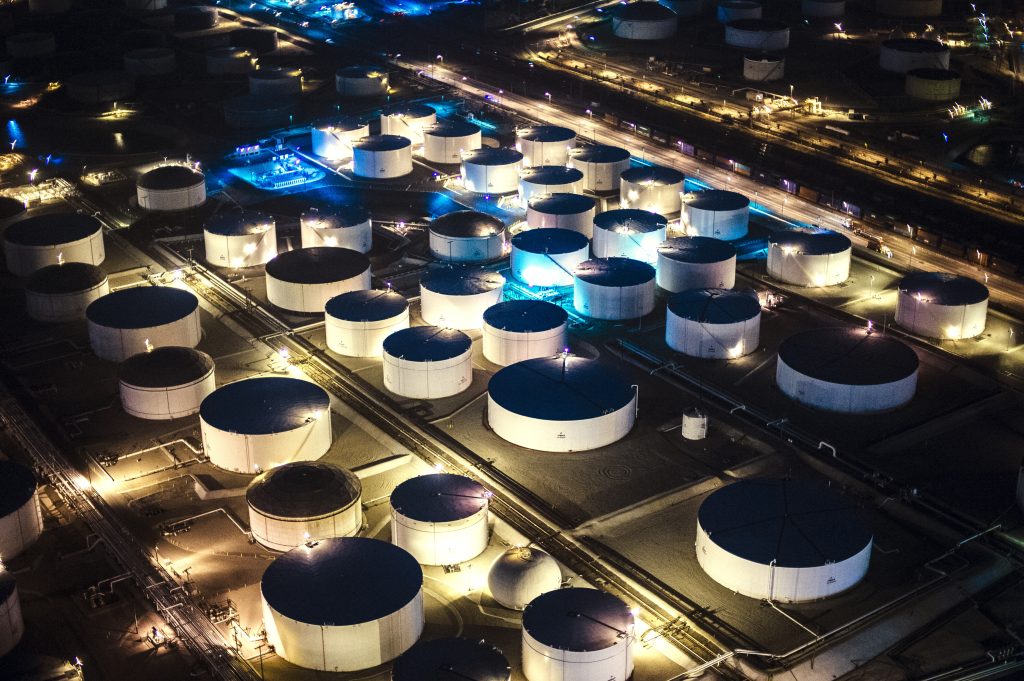
Tanques industriales de almacenamiento de combustible iluminados durante la noche en una instalación energética.

7. What Type of Investor Fits PEIP Galapa

PEIP Galapa is designed for investors who:

• seek exposure to real energy,
• prefer a model with identifiable assets and physical operations,
• understand that returns come from industrial margins, not pure financial speculation,
• and value the combination of:
• a Latin American project (growth, competitive cost),
• with European structure and governance (reporting, compliance, control).

It is not a mass-market product; it is a proposal for profiles that have already gone through more traditional investments and now seek differentiation with risk control.

8. How to Go Deeper Into the Model

If this summary of PEIP Galapa helps you better visualize how a PEIP works internally, the next logical step is:

• review the PEIP Quick Investment Guide,
• and, if interest remains after reading it,
• request the full PEIP Galapa dossier under NDA.

That is where we go into detail on:

• figures,
• investment tranches,
• legal structure,
• and return scenarios.

Infraestructura energética e industrial con gráficos financieros que representan la transformación del modelo PEIP en oportunidades de inversión reales.

From the PEIP Model to Real Opportunities: How Theory Becomes Concrete Projects

Over the past weeks, we’ve discussed the PEIP as a model:

  • what a Structured Investment Plan in Petroleum and Energy is
  • how capital flows inside it
  • what types of risk exist and how we manage them
  • and what type of investor this approach is designed for

The next logical question is:

“Great, I understand the model. How does this translate into real opportunities within SPFO?”

This article answers exactly that: how we move from the general PEIP framework to concrete projects that can be analyzed, modeled, and—when appropriate—financed.

1. One Model, Multiple Geographies, One Single Logic

The PEIP is not an isolated product. It is the common language we use to structure opportunities across different areas of the SPFO ecosystem.

Today, that ecosystem rests on three main pillars:

Latin America

Projects linked to biofuels and fuel oil, with real plants and operations in countries such as Colombia.

Europe

Import, logistics, and industrial asset reactivation operations in consolidated markets such as Spain.

SPFO International Platform

Integrating physical trading, terminal agreements, maritime and land logistics, and product structuring for B2B clients and investors.

The PEIP model is the organizing layer that allows an investor to see these projects not as isolated pieces, but as part of a coherent strategy:

capital → real energy asset → structured operation → cash flow → return

2. What a Project Must Meet to Become a PEIP

Not every project that reaches SPFO becomes a PEIP. We apply a series of criteria as filters before proposing any investment structure:

1. Identifiable and Relevant Asset

It must be a plant, a logistics hub, or a supply operation with real capacity to generate cash, not just an early-stage idea.

2. Industrial Operator With Track Record

The team managing the asset must be proven: in production, logistics, or commercial management. Operational experience is as important as the asset itself.

3. Clear Demand and Contracts

There must be identified demand, signed contracts, or a client base that justifies the expected production, storage, or distribution volume.

4. Mapped and Mitigable Risk

We don’t look for “risk-free” projects, but for projects where risk can be understood, quantified, and managed through concrete tools such as contracts, hedging, insurance, and legal structure.

5. Strategic Fit Within the SPFO Ecosystem

The project must add value to the company’s global map: complement routes, reinforce key geographies, or provide a competitive advantage beyond the isolated operation.

Only when these five elements align does it make sense to propose a PEIP associated with the project.

3. Examples of How the Model Applies Within SPFO

Without entering into detailed figures or confidential documentation, we can illustrate how the PEIP model applies to two major types of operations within the SPFO ecosystem.

a) Biofuel Plant in Latin America

In this type of project:

  • The asset is a plant that already produces, or can produce, biofuels at industrial scale
  • The operator is a local team with a track record, aligned with SPFO through operating, supply, and commercialization agreements
  • PEIP capital is directed toward expanding capacity, optimizing logistics, and increasing product rotation
  • Returns are generated through margins between raw material purchase, industrial transformation, and sales to domestic or export clients

The PEIP allows the investor to see not just “a plant,” but an operation described in terms of volumes, margins, risks, and mitigations.

b) Industrial and Logistics Project in Europe

In Europe, the model can apply to:

  • reactivation or conversion of a biofuel or derivatives plant
  • import and distribution operations from strategic terminals
  • logistics hubs connecting ports, storage, and industrial clients

In this context:

  • The PEIP structures the investment needed to reactivate, adapt, or expand the asset
  • SPFO’s role combines physical trading, local market knowledge, and management of relationships with terminals and clients
  • Returns rely on product volumes moved, logistics services provided, and improvements in operational efficiency

Again, the logic is the same:

structured capital → real asset → operation → cash flow

4. From General Interest to Concrete Opportunity: How the Process Works

For an investor, the natural path should not be:

“I see a project → they send me a contract.”

SPFO’s approach is different:

1. First, the model

The investor understands what a PEIP is, how capital flows, and how risk is managed.

2. Then, the ecosystem

We present the general map of operations: where SPFO operates, what types of assets we work with, and what the growth logic is.

3. Then, the concrete projects

For investors who show real interest and the right profile, specific dossiers are shared: PEIPs linked to plants, hubs, or specific operations.

4. Finally, the detailed structuring

Once expectations are aligned, we move into detailed documentation such as memorandums, agreements, timelines, and scenarios.

The goal is simple: that every opportunity the investor sees is understood as an application of the PEIP model, not as an isolated project without context.

Representación visual del flujo del modelo PEIP: capital invertido, activo energético real y retorno estructurado.

5. What SPFO Contributes Throughout This Process

In all cases, SPFO occupies a dual position:

Industrial and Logistics Operator

We participate in the daily reality of the operation: fuel in, fuel out, contracts, logistics, and certifications.

Investment Structurer

We translate that reality into a language the investor can understand: assets, risks, timelines, returns, and key metrics.

This duality allows us to:

  • align interests between operation and investment
  • filter out projects that don’t fit before they reach the investor
  • maintain communication based on data, not just narrative

6. From Guide to Dialogue: The Next Level

The Quick Guide to PEIP Investment exists precisely for this:

  • to help the investor understand the general model
  • to contextualize the different geographies and business lines
  • to prepare the ground so that when projects appear, whether a plant in Latin America or an industrial operation in Europe, the conversation doesn’t start from zero

From there, the next level is defined by the investor’s real interest:

  • what type of asset they prefer
  • what horizon and return range they seek
  • what weight they want energy to have within their overall strategy

The PEIP model is the framework.
The concrete opportunities within the SPFO ecosystem are the pieces that give it substance.

Análisis operativo y financiero de una instalación energética, con gráficos, documentación y equipos industriales en una planta de combustibles.

Investing in Energy—Yes, But With Control: Risk, Mitigation, and Investor Profile in a PEIP

In any honest conversation about investment, there’s one word that can’t be avoided: risk.

In the case of a PEIP (Structured Investment Plan in Petroleum), this word isn’t sugar-coated. We work with plants, fuels, logistics, contracts, and specific countries. That means real opportunities—but also real risks.

The key isn’t whether risk exists, but how it’s understood, how it’s managed, and who it makes sense for.

This article addresses three essential questions:

  • What types of risk are relevant in a PEIP?
  • What does SPFO do to mitigate them?
  • What kind of investor fits (and who doesn’t) in this model?

1. Risk in a PEIP: From Abstract to Concrete

A PEIP operates in the real economy. That implies a set of risks that can be grouped into four main categories:

Market Risk

Fuel price fluctuations, changes in spreads, exchange rate movements, stronger or weaker demand than expected.

Counterparty Risk

Clients’ and suppliers’ ability and willingness to pay, contract compliance, financial stability of those involved in the operation.

Operational and Logistical Risk

Plant process failures, transport delays, terminal incidents, technical issues affecting the ability to produce, store, or deliver product.

Regulatory and Environmental Risk

Regulatory changes, specific taxes, environmental restrictions, country risk in the jurisdictions where operations take place.

Pretending these risks don’t exist would be self-deception.
The question is whether they’re addressed structurally—or left to chance.

2. How We Manage Risk in a PEIP

SPFO’s philosophy is clear: there is no sustainable return without serious risk management.

Each PEIP incorporates mitigation mechanisms aligned with the risk categories above.

a) Market: Prices, Margins, and Volatility

  • The model doesn’t rely on “guessing oil prices,” but on structuring industrial and logistical margins over recurring operations.
  • Contracts, indexed formulas, and—where appropriate—hedging tools are used to reduce exposure to extreme market movements.
  • Priority is given to operations with identified demand, rather than pure speculation on inventory.

b) Counterparty: Who We Do Business With

  • Commercial and financial due diligence is conducted on clients and suppliers before entering medium-term relationships.
  • Security instruments are used when necessary (guarantees, letters of credit issued by solvent institutions, etc.).
  • Excessive concentration of risk in a single counterparty is intentionally avoided.

c) Operations and Logistics: From Paper to Ground

  • We work with specialized industrial and logistics operators—not improvisers.
  • Product certification and independent quality controls are required at critical points (plant, terminal, loading, unloading).
  • Operations are designed with the realities of ports, roads, access points, and logistics timelines in each country in mind.

d) Regulatory Environment: Playing by the Rules

  • Projects are selected not only for their economic margin, but also for their regulatory framework.
  • Local and international legal counsel is involved, and regulatory developments in each energy market are closely monitored.
  • Compliance with KYC/AML, international sanctions, and reporting is not an add-on—it’s a starting condition.

The goal isn’t to eliminate risk (that doesn’t exist in real investment), but to reduce it, understand it, and make it manageable for the type of investor the PEIP is designed for.

3. Not Everyone Fits: Who a PEIP Is For

A PEIP is not a savings product.
Nor is it a tool for seeking immediate liquidity or chasing short-term trends.

It’s designed for a type of investor who understands three basic principles:

1. Real Economy Means Real Risk

If capital finances plants, logistics, and contracts, there will always be operational risk. What matters is that it’s mapped and managed.

2. Returns Are Linked to Time and Operational Cycles

It makes no sense to enter expecting exits in weeks or a few months. We’re talking about reasonable horizons of 2–3 years, with project logic.

3. Visibility and Transparency Matter as Much as Return Percentage

It’s not just about the target figure, but about seeing where it comes from, how it’s generated, and under what conditions.

With this in mind, we can define the investor profile for whom a PEIP makes sense.

4. The Investor for Whom a PEIP Makes Sense

Generally speaking, a PEIP fits:

  • Family offices and private wealth managers seeking part of their portfolio exposed to real assets and diversification beyond purely financial instruments.
  • Sophisticated private investors who understand basic concepts of risk, return, and time horizon—and the difference between real economy and derivatives.
  • Co-investment vehicles or investment clubs looking to participate in specific operations under a defined structure, with SPFO as industrial partner and structurer.

In all cases, the key is the same: willingness to rigorously analyze a project beyond the headline return percentage.

Buque cisterna atracado en una terminal portuaria durante una operación logística de combustibles dentro de una inversión en economía real.

5. The Investor for Whom a PEIP Is Not Suitable

It’s equally important to be clear about who a PEIP is not for:

  • Those seeking immediate liquidity or very short timeframes.
  • Those expecting “guaranteed” returns or zero volatility.
  • Those uncomfortable with financing operations in specific markets.
  • Those who decide based solely on a return figure without wanting to understand the project.

At SPFO, a key part of our work with investors is precisely this prior conversation: explaining the model, clarifying doubts, adjusting expectations—and openly saying so if it’s not a fit.

6. Transparency Before Commitment

Before an investor enters a PEIP, they should have access to:

  • A clear view of the asset and operation.
  • A structured risk and mitigation framework.
  • An honest explanation of the target return range and time horizon.

That’s why SPFO’s process doesn’t start with a contract—it starts with information:

  • Guides and framework documents to understand the PEIP model.
  • Specific project dossiers (when there’s real interest).
  • Meetings where questions are answered with data—not just narrative.

Only after that does it make sense to talk about concrete participation.

Conclusion: Risk—Yes, But Not Blindly

Investing in energy through a PEIP means accepting a reality: there is risk, there is complexity, and there are variables to manage.

SPFO’s proposal is not to deny that reality, but to organize it:

  • Select operations that make industrial and financial sense.
  • Structure them in a way that’s understandable to the investor.
  • Put both the potential and the challenges on the table from the start.

For the right investor—one who understands that the real economy is never risk-free—the PEIP can be a reasonable way to access the energy sector with a clear working framework.

The starting point is not a promise, but transparency. From there, we build.

Representación del recorrido del capital a través de las distintas fases operativas de un PEIP

How the PEIP Works Internally: The Journey of One Euro From Entry to Return

When an investor evaluates an opportunity, beyond the narrative, one question always appears sooner or later:

“If I invest here… what exactly happens to my money?”

In the case of a PEIP (Structured Investment Plan in Petroleum), this question is especially relevant because the promise is not based on a financial index, but on real operations: plants, tanks, contracts, logistics, fuel moving in and out.

In this article, we will do something very simple:

Follow the journey of one euro inside a PEIP—from the moment it enters to the moment it returns with its yield.

1. Before the Euro Enters: What Must Exist for a PEIP to Be Created

No PEIP begins with money. It begins with the operation.

Before structuring anything, SPFO analyzes whether the project meets a series of minimum conditions:

Identified Real Asset

A plant, a logistics hub, a recurring supply operation—not an idea on a PowerPoint slide.

Industrial Operator With Track Record

A team that has already produced, stored, or moved product and knows how to manage day-to-day risks.

Clear Demand

Signed contracts or solid commercial relationships that justify the volume to be moved and the capacity to generate cash.

Mapped Risks

Understanding what can go wrong (price, counterparties, logistics, regulation) and what tools exist to mitigate it.

Only when these elements are on the table does it make sense to propose a PEIP.

In other words: the industrial and commercial opportunity exists first, and the investment vehicle is designed afterward—not the other way around.

Espacio de trabajo profesional con documentación y esquemas sobre una mesa, representando el análisis y la evaluación previa de una inversión antes de su puesta en marcha.

2. Capital Entry: How the Euro “Enters” the PEIP

Once the project is validated, the investment structure is defined:

  • Total round amount
  • Estimated time horizon
  • Target return range
  • Investor position within the structure

The euro contributed by the investor does not enter a “black box,” but a structure with clear rules:

  • A specific vehicle or defined framework
  • Agreements between SPFO, the operator, and the capital
  • A use of funds aligned with the real needs of the operation (not unrelated expenses)

From the very beginning, the euro has an operational purpose: it is meant to work in the plant, in the tanks, in the logistics flow—not to sit idle on a balance sheet.

3. Operational Allocation: What That Euro Becomes on the Ground

Depending on the type of PEIP, the same euro can take different forms.

In essence, it is directed toward three major areas:

Working Capital

Allows the purchase of product (diesel, biofuel, fuel oil, etc.), maintenance of strategic inventory, and the ability to seize price and volume opportunities.

In practice: more liters managed, more rotation, more total margin.

Operational and Logistical Improvements

Finances adjustments in the plant or hub: pumps, loading lines, tank optimization, auxiliary equipment.

The goal is clear: do more with the same infrastructure or reduce bottlenecks.

Commercial and Route Development

In some cases, part of the capital supports new distribution routes or pilot export operations that open additional markets.

In all cases, the euro leaves the financial side and moves to the industrial side: it becomes capacity to produce, store, move, and sell product.

4. Cash Flow Generation: Where the Return Is Created

The investor’s return does not appear magically.

It is generated in the difference between what the operation costs and what it is able to earn.

In a typical PEIP, cash flows come from:

Product Buy–Sell Margins

The differential between the price at which fuel or biofuel is purchased and the price at which it is sold, considering logistics and financial costs.

Logistical and Industrial Services

Income from storage, product handling, blending, pumping, plant services for third parties, etc.

Operational Efficiency

The more optimized the plant or hub, the greater the ability to rotate inventory, minimize downtime, and negotiate competitive conditions with suppliers and clients.

What matters is that the investor’s euro does not multiply in the air:

It does so through operations that can be measured, audited, and reported.

Terminal energética con tanques de almacenamiento, logística portuaria y transporte marítimo de combustible

5. From the Operation’s Cash Box to the Investor’s Cash Box: Return and Reporting

As the plant or operation generates margin, the results of the PEIP materialize:

The operation covers its direct costs (product, logistics, insurance, certifications, personnel).

Operational profits are obtained and, according to the agreed structure, are allocated to:

  • Partial reinvestment in the operation (to continue growing)
  • Remuneration of the capital that made that growth possible

In parallel, SPFO maintains a reporting framework for the investor that includes, among other elements:

  • Evolution of managed volumes
  • Average margins per operation or period
  • Relevant milestones (new clients, new routes, technical improvements)
  • Overall project status compared to initial scenarios

When the PEIP reaches its time horizon (e.g., 24–36 months), the investor should be able to answer two fundamental questions:

“What happened to my euro during this time?” “How much of that journey has already returned as capital + yield?”

The structure exists precisely for that: to organize the process and provide visibility.

6. How This Differs From a Traditional Financial Product

Comparing this journey with that of a classic financial product reveals a key difference:

In a traditional fund or ETF:

  • The investor’s money becomes shares in a portfolio of financial assets.
  • The link to the real operations of underlying companies is indirect.

In a PEIP:

  • The investor’s money becomes productive, logistical, or commercial capacity in a specific project.
  • The link to real operations is direct: tank, plant, vessel, contract.

This does not make the PEIP “better” by definition, but it does make it more tangible for the investor who wants to clearly see what is being financed.

7. Why Understanding the Euro’s Journey Matters Before Investing

There are two common mistakes when analyzing real-economy opportunities:

Focusing only on the expected return percentage

Without understanding where it comes from, what operation generates it, or what risks are involved.

Focusing only on the narrative of the asset

“Plant,” “terminal,” “vessel”… it sounds good, but without understanding the capital flow, it is difficult to assess the seriousness of the project.

The value of a PEIP lies not only in its potential profitability, but in the fact that it allows the capital’s path to be traced:

From contribution to repayment, through daily operations.

The clearer that path is, the easier it is to make informed decisions.

Análisis y explicación del modelo de inversión antes de tomar decisiones

Next Step: From the General Model to Your Own Analysis

The Quick Guide to PEIP Investment we have developed is designed precisely for this:

To organize the model, detail the structure, and accompany it with real examples of projects we are already executing.

Understanding how a PEIP works internally is the step before analyzing whether it:

  • Fits your risk profile
  • Fits your time horizon
  • Fits the way you want to gain exposure to the energy sector

From there, the conversation can focus on what truly matters:

Which types of projects make sense for you within the SPFO ecosystem.

Terminal portuaria con tanques de almacenamiento de energía y operaciones logísticas

What Lies Behind the PEIP: From Physical Operations to the Investment Vehicle

When people talk about investing in energy, the same references almost always appear: stocks, futures, indexes, ETFs, structured products. In other words, financial layers that rely—more or less indirectly—on a sector the investor rarely sees up close.

At SPFO, the starting point is different. Our daily work does not begin with a chart, but with physical operations: biofuel plants, storage tanks, supply contracts, vessels arriving at port, land logistics, and industrial clients who need product every single day.

From that reality, we build the PEIP: the Structured Investment Plan in Petroleum.

This article explains what lies behind that concept and why we believe it is a coherent way to connect private capital with real energy.

From the Tank to the Investor: The Origin of the PEIP

A PEIP is not a generic catalog product. It is not a typical “energy fund,” nor a closed vehicle where the investor enters without knowing exactly which assets are inside.

Each PEIP is born from a specific operation:

  • A plant already in operation that needs capital to expand capacity or improve logistics.
  • A storage hub that can become a strategic distribution point if its financial and operational structure is reinforced.
  • A recurring import and distribution operation where the bottleneck is the amount of available capital, not demand.

Based on that real foundation, SPFO designs a structured plan:

  • It defines the asset and its operational context.
  • It analyzes demand, contracts, and the operator’s capabilities.
  • It maps risks and mitigation tools.
  • It determines how much capital makes sense to inject, on what timeline, and under what return logic.

The result is a PEIP: a framework that allows the investor to participate in a specific energy operation with far greater visibility than traditional financial products.

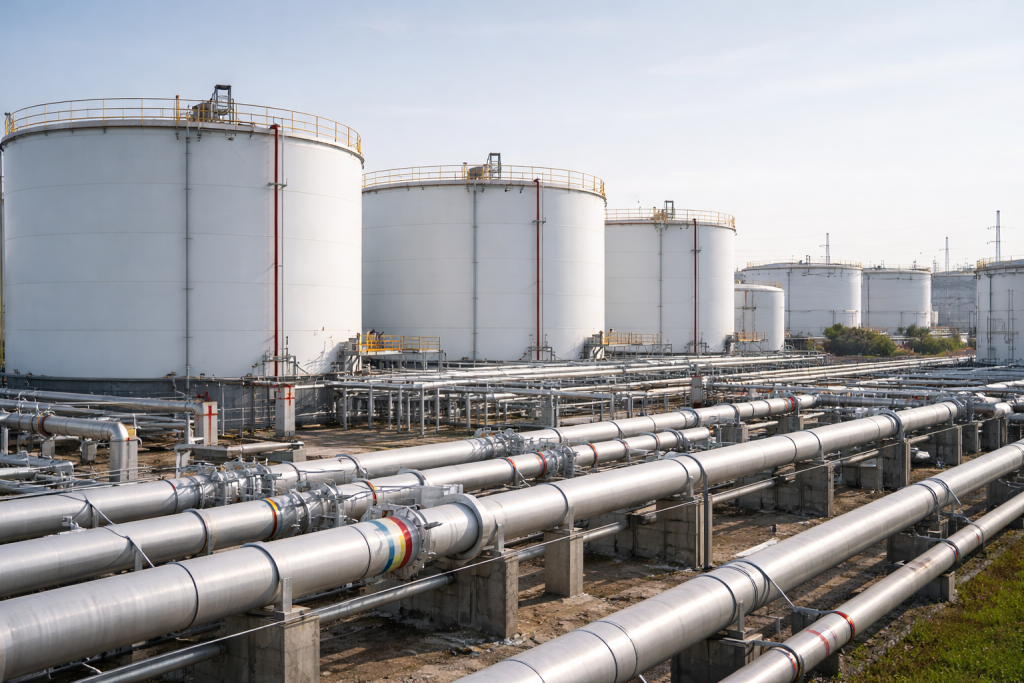
Tanques de almacenamiento de combustible e infraestructura industrial en operación, base física de las operaciones energéticas sobre las que se estructura un PEIP.

What the PEIP Is, in Simple Terms

A PEIP can be defined directly:

A PEIP is a structured plan that channels capital into energy operations with identifiable physical assets, measurable cash flows, and explicit risk management.

In practice, this implies three key ideas:

Real Asset

There is always a plant, an infrastructure, a logistics flow, or a set of concrete contracts behind it. The investor does not enter “the energy sector”—they enter a defined operation.

Engaged Industrial Operator

SPFO does not act as a mere financial intermediary. It is part of the operational structure: physical trading, logistics, contracts, hedging. That means skin in the game.

Return Based on the Real Economy

The target return is supported by industrial and logistical margins: buy–sell differentials, storage fees, plant services, inventory rotation, etc.—not purely speculative expectations.

PEIP vs. a Traditional Fund: A Different Approach

At first glance, a PEIP may resemble a sector-based energy fund. Both expose the investor to the same macro environment: energy demand, transition, regulation, price volatility.

The difference lies in the level of concreteness.

In a traditional fund:

  • The investor buys shares of a portfolio of financial assets (stocks, bonds, derivatives).
  • The connection to the physical asset is indirect and filtered through the stock market.
  • Visibility into contracts, operations, and logistics is limited.

In a PEIP:

  • The focus is on a specific asset and operation.
  • It works with supply contracts, storage agreements, maritime and land logistics, industrial clients.
  • The investor can understand which asset is being financed, what cash flow it generates, and how the return is structured.

It is not about claiming that one approach is universally better. They are different tools.

The PEIP is designed for the investor who wants to get closer to the real economy with a more direct and operational structure.

Contraste entre análisis financiero y operación física en el sector energético

Why Energy Remains a Strategic Asset

Beyond the structure, the underlying question is clear:

Why look at the energy sector right now?

Several reasons:

Structural Demand

The global economy may go through cycles of higher or lower growth, but energy demand never disappears. The energy matrix evolves, renewables expand, regulations adjust—but transport, industry, and logistics still require fuels and biofuels.

Physical Assets That Generate Cash

Plants, tanks, terminals, supply contracts, logistics routes. These are not abstract intangibles; they are infrastructures and operations that, when well managed, generate recurring and measurable cash flows.

Space for Specialized Operators

Energy is a sector with real entry barriers: regulation, technical knowledge, access to product, relationships with suppliers and clients. That complexity creates inefficiencies and opportunities that only operators inside the physical market can capture.

For the investor, this means one thing:
If structured correctly, energy remains a strategic pillar of diversification.

SPFO’s Role Within the PEIP

SPFO positions itself as a platform that unites three worlds:

  • Product: access to fuels and biofuels through real operations in Europe and Latin America.
  • Logistics: terminals, plants, maritime and land routes, quality certifications, insurance.
  • Capital: structuring vehicles so professional investors and family offices can participate in these operations with a clear risk–return framework.

In a PEIP, SPFO does not simply design the document—it participates in daily execution, which allows it to:

  • Better control operational risk
  • Align interests with the investor
  • Translate on-the-ground reality into useful decision-making information

A Guide to Understanding the Model Before Sitting Down to Talk

The goal of this first phase is not for anyone to make an investment decision based on a post or article.

It is to offer context, structure, and a shared language.

That is why we developed the Quick Guide to PEIP Investment, where we:

  • Explain the model in an organized way
  • Show examples applied to real plants and logistics operations
  • Detail how the main risks are managed

For anyone approaching the SPFO ecosystem for the first time, the guide is the natural bridge between curiosity and a serious conversation.

Documentación técnica y planificación operativa en un entorno energético, reflejando un enfoque basado en comprensión, análisis y toma de decisiones informadas.

Next Step

If you want to understand how an energy operation becomes a structured investment opportunity, the first step is not a call—it is comprehension.

The Quick Guide to PEIP Investment is designed precisely for that:
To provide a clear view of the model, the assets, and the philosophy behind how we work with energy as an investment vehicle.

From there, the conversation can be far more concrete, transparent, and useful for all parties.

The Future of the Energy Sector: Digitalization, Logistics, Direct Access, and Data

The energy sector is undergoing a major transformation. Beyond the production and distribution of fuels, technological innovation and intelligent data management are redefining how companies operate, optimize costs, and connect with customers. Below are the pillars shaping the future of the industry.

Digitalization: Efficiency and Real-Time Control

Digitalization not only streamlines internal processes it also enables faster, more accurate decisión making. Advanced monitoring and energy management systems make it possible to:

  1. Optimize processes: real-time control of inventories, fleets, and storage facilities.
  2. Reduce errors: automated ordering and billing minimize human mistakes, losses, and delays.
  3. Predict demand: analytics help anticipate consumption patterns and optimize purchasing based on historical data and market trends.

With these tools, companies can react immediately to changes in prices or consumption, improving margins and lowering risk.

Smart Logistics: The Path to Efficiency

Transport and storage represent a significant portion of total energy costs. For this reason, implementing advanced logistics solutions has become essential. Examples include:

  • Optimized routes through planning software that reduces delivery time and cost.
  • Fleet management with real-time tracking and preventive maintenance to avoid disruptions.
  • Strategic storage infrastructure: using well-located depots to ensure continuous supply.

Efficient logistics not only lowers expenses it also strengthens reliability for clients and partners.

Direct Access: New Ways to Engage Customers

The future of the energy sector goes beyond traditional sales. Companies are developing direct-access channels that provide personalized services, transparency, trust, and long-term loyalty. These strategies place the customer at the center, turning them into an active partner in the operation.

Data: Information as a Competitive Advantage

Data is the new fuel. Collecting, analyzing, and leveraging information enables companies to:

  • Anticipate trends in consumption and pricing: making purchasing and sales decisions more accurate.
  • Manage risk: identifying and mitigating possible supply disruptions or market fluctuations.
  • Innovate and develop: creating products and services based on real customer behavior and needs.

In a sector where every liter counts, precise information directly translates into efficiency and profitability.

In Summary: The Energy Future Is Digital, Connected, and Strategic

Digitalization, smart logistics, direct customer access, and the strategic use of data are redefining the energy industry. Companies that adopt these pillars will not only optimize operations and reduce costs they will also be better positioned to deliver value to customers, adapt to market shifts, and secure sustainable long-term growth.

How Does an Energy Company Make Money?

Margins, volume, and efficiency: the core pillars behind profitability in the energy sector

In the energy industry, profitability is not defined solely by producing or distributing energy — it
depends on how every step of the process is managed. From extraction or generation to final
sales, each decision shapes a company’s financial results.

The energy business is built on a combination of factors that must remain in balance: profit
margins, operational volume, and resource efficiency. This balance determines whether a
company can grow, withstand market fluctuations, or fall behind in a highly competitive and
volatile environment.

1. Margins: the delicate balance between costs and prices

In the energy sector, margins are the foundation of any financial analysis. They represent the
difference between the cost of producing, transforming, or distributing energy and the price at
which it is ultimately sold.

These margins are not fixed they constantly shift based on market conditions, regulations, and
international prices of oil, gas, or electricity.

  • For refineries, the refining margin depends on the value of crude oil compared to the
    price of the refined products obtained (gasoline, diesel, fuel oil, kerosene, etc.).
    • If crude oil becomes more expensive while refined products do not increase at the
      same pace, margins tighten.
    • If refined products rise faster than the cost of crude, profitability increases.
  • For electric utilities, margins are calculated by the difference between the cost of
    generating or purchasing energy and the price at which it is sold to consumers or
    distributors.

Managing these margins requires strategic planning and constant monitoring of market
conditions.

2. Volume: the power of large-scale operations

In the energy business, solid margins alone are not enough volume is equally crucial.
Companies usually operate with small unit margins, but they move massive quantities of
product.

A trader earning only a few cents per barrel can achieve millions in profit if handling thousands
of tons per day. The same applies to electricity and natural gas distributors: the key is not how
much is earned per customer, but how many customers they supply and how much energy
flows through their network.

Scale generates economies that allow companies to absorb fixed costs, invest in infrastructure,
and negotiate better terms with suppliers and partners.
In other words, volume provides stability in a market where prices can fluctuate by the hour.

3. Efficiency: the true driver of long-term profitability

The third pillar and often the most strategic is operational efficiency. In a context where
margins tighten and global competition grows, being more efficient means staying competitive.

Key drivers of efficiency include:

  • Reducing internal energy consumption and optimizing logistics.
  • Digitizing operations to forecast demand and manage inventories more accurately.
  • Minimizing unplanned shutdowns in plants and automating risk management in trading.

A refinery that extracts more liters per barrel, a power plant that reduces downtime, or a trading
desk that automates its risk controls gains a significant advantage.
Every point of efficiency translates directly into profitability and long-term capacity for
investment and technological adaptation.

Profitability and sustainability: a necessary balance

Today, profitability is no longer measured solely by financial metrics. Energy companies must
remain profitable while reducing their environmental footprint and aligning with global energy
transition targets.

Investments in renewable energy, carbon capture, and low-emission fuels are becoming part of a
new efficiency equation where sustainability also creates value.

In the medium term, the companies that successfully integrate profitability and sustainability will
be the ones capable of maintaining stable margins, operating at greater scale, and making the
most efficient use of their resources.

In summary, an energy company makes money at the intersection
of margin, volume, and efficiency:

  • Margin ensures immediate profitability.
  • Volume provides long-term stability.
  • Efficiency sets the competitive edge.

In a dynamic market like energy where prices shift and regulations evolve the strongest
companies aren’t necessarily the biggest, but those capable of turning every liter and every
investment into continuous, sustainable value.


© SPFO Group - All rights reserved

Privacy Overview

This website uses cookies so that we can provide you with the best user experience possible. Cookie information is stored in your browser and performs functions such as recognising you when you return to our website and helping our team to understand which sections of the website you find most interesting and useful.