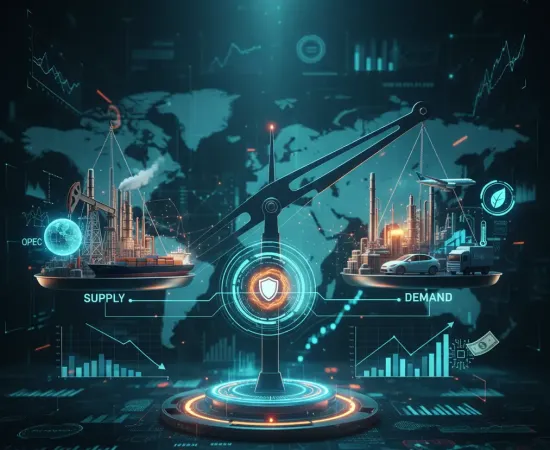
Buying fuel on a large scale is far more complex than simply paying a price per liter. Behind every transaction lies a network of financial, logistical, and contractual agreements that ensure the uninterrupted flow of products across the supply chain.
Purchasing methods and financing tools are essential for refineries, transport companies, and distributors to operate with both security and liquidity.
Main Purchasing Methods
Market participants use different purchasing modalities depending on their operational needs and management capacity. (Some of these concepts were explored in more detail in our article on commodity trading.) These modalities include:
- Spot contracts: Used for immediate purchases, taking advantage of market opportunities or urgent supply needs.
- Forward contracts: Set purchase conditions for a future date, securing price and availability.
- Long-term supply agreements: Established between producers and large consumers to guarantee stability and continuity.
These agreements allow companies to plan operations, manage risks, and optimize cash flow, ensuring greater predictability in their trading activities.

Financing: The Invisible Support Behind Energy Operations
In the fuel market, financing is as vital as the product itself. Transactions can reach millions of dollars, so it’s common to use financial instruments that guarantee payment without compromising liquidity on either side.
The most common mechanisms include:
- Commercial credit: The seller grants payment terms to the buyer.
- Pre-financing of cargo: The buyer receives funds to pay for the product before shipment.
- Energy factoring: Enables companies to advance the collection of their invoices.
These tools strengthen trust between parties and ensure that trade flows remain uninterrupted, even during periods of market volatility.
The Importance of Trust and Guarantees
In an environment where transactions involve large amounts and extended timelines, trust is reinforced through financial documentation and bank guarantees. This is why letters of credit and performance bonds are widely used—they provide security to both parties and reduce the risk of non-payment or default.

In Summary: The Financial Backbone of the Fuel Value Chain
Purchasing and financing methods are the foundation that sustains the global fuel value chain. Without them, energy trade would be disrupted and supply continuity would be at risk.
Thanks to these systems, the sector operates with stability and confidence, ensuring that fuel reaches every consumption point safely and consistently—while fostering trust among all stakeholders involved in each transaction.